

What the examples have in common
- The first line earns the second. LinkedIn shows only the opening of a post until the reader expands it, so the first line states the idea plainly instead of warming up.
- One idea per post. A post that tries to cover three points is usually three posts.
- Specific beats general. "Two of our clients missed the same deadline" is more interesting than "deadlines matter".
- Short paragraphs. Plain text, broken into short lines, reads well on a phone.
- A few hashtags, at the end. They help people find the post; a wall of them reads like an advert.
1. The lesson learned
This is a made-up example for a fictional engineering consultancy, shown to illustrate the format. It is not a real client.
The most expensive line on a site survey is the one nobody wrote down.
On a recent warehouse project, the drawings were right and the calculations were right. What was missing was a note that the floor slab had been patched ten years earlier. We found out when the racking went in.
Since then, every survey we do has a "what has changed since it was built" section, even when the answer is "nothing we can see".
What is the one question you now always ask on a first visit?
#Engineering #SiteSurvey #Construction
Why it works: it opens with a claim, backs it with a short, concrete story and ends with what changed as a result. The closing question invites peers to share their own version.
Structure: claim, the situation, what went wrong or right, what we do now, a question.
2. The short how-to
This is a made-up example for a fictional HR consultancy, shown to illustrate the format. It is not a real client.
A first-week plan for a new hire fits on one page. Here is ours:
Day 1: laptop, logins and lunch with the team. No training.
Day 2: shadow the person they will work with most.
Day 3: one small task they can finish by the end of the day.
Day 4: a 30-minute check-in about what is confusing.
Day 5: a written note on what they will own by the end of the month.The point is not the schedule. It is that someone wrote it down before they arrived.
#HR #Onboarding #SmallBusiness
Why it works: it delivers something useful in the post itself, so the reader does not have to click anywhere. It is easy to save and share.
Structure: the promise in one line, a short list, one sentence on why it matters.
3. The considered opinion
This is a made-up example for a fictional IT support firm, shown to illustrate the format. It is not a real client.
Most small offices do not need more security software. They need fewer shared passwords.
When we start with a new client, the first risk we find is rarely missing antivirus. It is one login for the accounts system that five people know, written on a note under a keyboard.
Giving each person their own account costs almost nothing and fixes more than the next tool you could buy.
#ITSupport #Cybersecurity #SmallBusiness
Why it works: it takes a clear position against a common assumption and supports it with what the business actually sees. Opinions get attention when they are backed by experience, not when they are loud.
Structure: the opinion, the evidence from your own work, the practical conclusion.
4. Behind the scenes
This is a made-up example for a fictional commercial cleaning company, shown to illustrate the format. It is not a real client.
Our night team starts at 7 pm and the first thing they do is not cleaning. It is a ten-minute walk-through with a checklist and a torch.
They look for anything that changed since last night: a new desk layout, a leak under a sink, a door that no longer locks. Most of what we report to clients in the morning comes from those ten minutes.
The clean is what people see. The walk-through is what they rely on.
#FacilitiesManagement #CommercialCleaning
Why it works: it shows something the client's customers never see, and turns an ordinary routine into a reason to trust the business.
Structure: a specific moment, what happens in it, why it matters to the customer.
5. The question to the audience
This is a made-up example for a fictional physiotherapy clinic, shown to illustrate the format. It is not a real client.
If you work at a desk, when did you last stand up?
We ask every new patient with back or neck pain the same thing, and the most common answer is "I'm not sure". Setting a reminder to stand and move for two minutes every hour is one of the simplest changes we suggest.
What has worked for you: a reminder, a standing desk, or walking meetings?
#Physiotherapy #WorkplaceWellbeing
Why it works: it starts with a question the reader can answer for themselves, adds one useful piece of advice and asks for experiences rather than opinions.
Structure: a question, a short observation, one suggestion, an open question.
Mixing post types for a client
A feed made of only one type gets predictable. Rotating between lessons, how-tos, opinions, behind-the-scenes posts and questions keeps a client's page varied without changing its voice. For a client posting twice a week, two or three types in rotation is plenty. Our guide on how many posts per client helps set the number.
Writing LinkedIn posts for several clients
The examples above sound like five different businesses because they are written in five different voices. Keeping those voices apart is the hard part of producing LinkedIn content for several clients. Our guide on keeping a consistent brand voice across clients covers how to write each voice down.
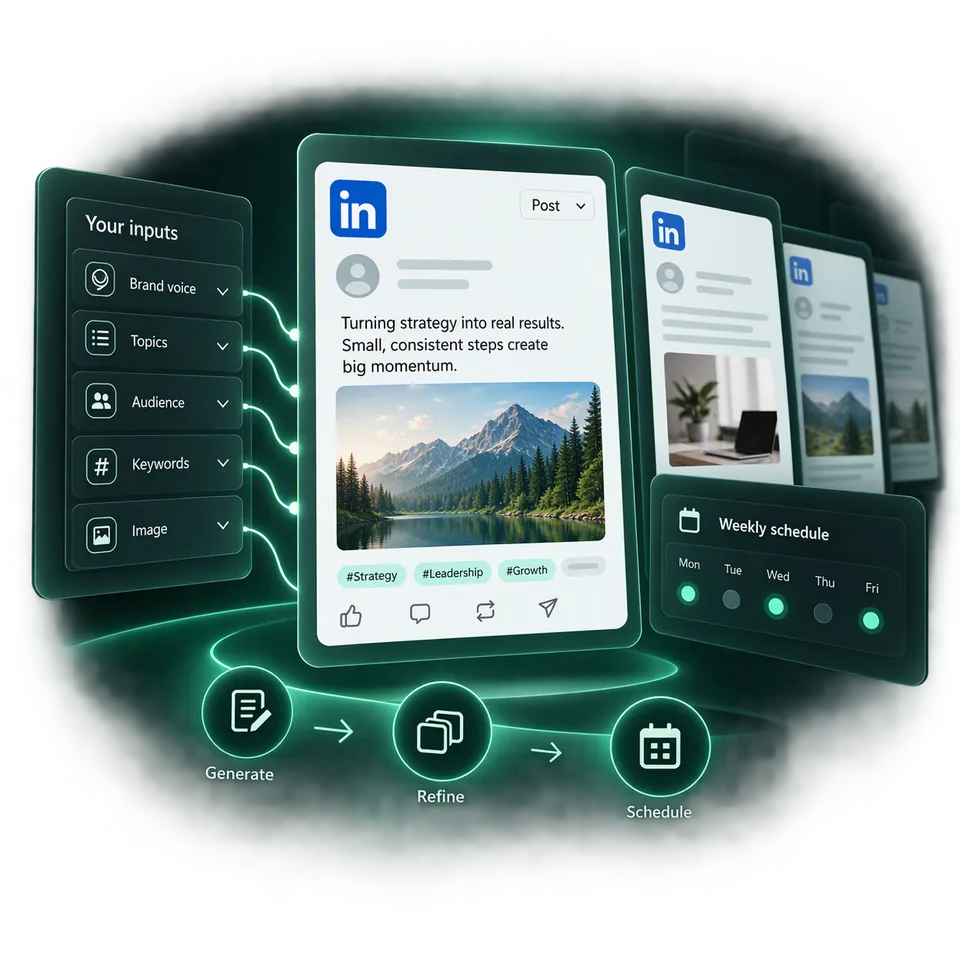
Zentivue's LinkedIn post generator drafts plain-text LinkedIn posts for each client in that client's voice, with a few hashtags and an image where one fits. You choose how often each type of post comes up, so a client's feed does not repeat the same idea. Every draft waits for a person to review, edit and approve it. Consultants who want thought-leadership drafts to edit can see how it works for consultants, and plans are on the pricing page.